

Forex Trend Trading: Constructing Strategies, Tools, and Risk Management
Introduction to Forex Trend Trading
The world of forex is a dynamic and ever-changing arena, much like a vast ocean where currents can shift at a moment’s notice. In this ocean, trend trading strategies are akin to navigating with a compass, helping traders to identify and follow the market’s predominant direction. In this article, we’ll embark on a journey to understand the nuances of forex trend trading, laying down a map for both novice and seasoned traders alike. For those new to forex, check out our introductory guide at Introduction to Forex Trading.
Forex trend trading is built on the principle that ‘the trend is your friend.’ This approach involves identifying the direction in which the market is moving and making trades that align with this direction. It’s about catching the wave at the right moment and riding it to potential profits, always with an eye on the horizon for any changes.
Understanding Forex Trends
First and foremost, what exactly is a trend in the forex context? Simply put, a trend in forex is a general direction in which a currency pair is moving. Trends can be upward, downward, or even sideways. Understanding these trends is crucial because it helps traders make informed decisions about entry and exit points. For a deeper dive into the different market movements, visit our article on market trends at Understanding Forex Market Trends.
There are three main types of trends:
- Upward Trends: Characterized by higher highs and higher lows, suggesting a bullish market sentiment.

- Downward Trends: Marked by lower highs and lower lows, indicating a bearish market sentiment.
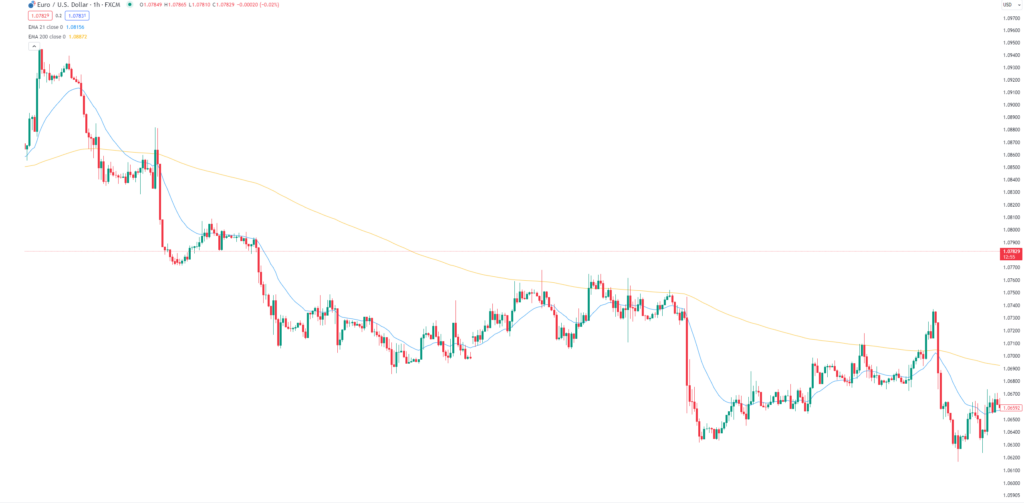
- Sideways Trends: Where the price moves within a certain range without a clear upward or downward direction.

Duration of trends is another aspect to consider. Trends can be short-term, medium-term, or long-term, and identifying the duration helps in applying the appropriate strategy.
Key Principles of Trend Trading in Forex
Trend trading in forex is not just about identifying the trend; it’s also about understanding when to enter and exit trades and how to manage risks. At the core of this approach is technical analysis – a methodology for forecasting the direction of prices through the study of past market data, primarily price and volume. Learn more about technical analysis in our comprehensive guide at Guide to Technical Analysis in Forex.
Several key principles underpin effective trend trading:
- The Trend is Your Friend: This adage reminds traders to align their trades with the direction of the overall trend, rather than going against it.
- Identifying Trend Strength and Reversals: Using various technical indicators to assess the strength of a trend and to predict potential reversals.
- Risk Management: Perhaps the most critical aspect, effective risk management ensures that traders minimize losses and protect their profits.
In the next part of our article, we will delve into specific forex trend trading strategies, tools, and indicators that traders can use to enhance their trading decisions. Stay tuned, and meanwhile, for additional insights into forex strategies, browse through our strategy guide at Forex Trading Strategies.
For further exploration, a resource worth reading is Investopedia’s Guide on Forex Trading, which offers a broad overview of strategies used in forex markets.
Forex Trend Trading Strategies
Building on our understanding of forex trends, it’s time to explore specific strategies that traders can adopt. Trend trading strategies in forex revolve around the concept of capturing gains by analyzing the momentum of a currency pair. These strategies can be broadly categorized into trend continuation and trend reversal strategies.
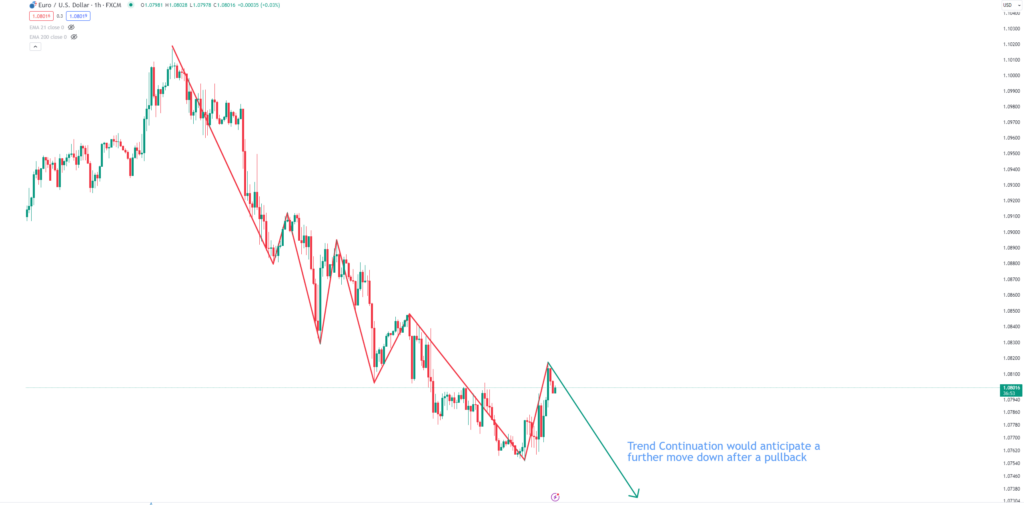
- Trend Continuation Strategies: These involve identifying and following a trend that is already in place. For instance, if a currency pair is on an downward trend, a trend continuation strategy might involve selling during a minor pullback within that trend.
- Trend Reversal Strategies: In contrast, trend reversal strategies aim to identify when a current trend is losing momentum and is likely to reverse. This might involve selling a currency pair when there are indications that an upward trend is about to turn downward.

Tools and Indicators for Trend Trading
To effectively implement these strategies, traders utilize a range of tools and indicators. The most commonly used indicators include:
- Moving Averages: Useful for smoothing out price data to identify the overall direction of the market trend.
- Trend Lines and Channels: These help in visualizing the direction of the trend and identifying potential areas of support and resistance.
- Momentum Indicators: Such as the Relative Strength Index (RSI) and Moving Average Convergence Divergence (MACD). These indicators provide insights into the strength of the trend and potential reversal points.
Each of these tools offers unique insights and, when used in combination, can provide a more nuanced view of market trends.
Risk Management in Forex Trend Trading
Risk management is the safety net of forex trading. It involves strategies to minimize potential losses, ensuring that one bad trade doesn’t wipe out an entire trading account. Key aspects of risk management include:
- Setting Stop-Loss Orders: These orders automatically close a trade at a predetermined level to limit potential losses.
- Managing Leverage and Position Sizing: Leverage can amplify gains but also losses. Hence, it’s crucial to use leverage cautiously and to adjust position sizes according to the risk tolerance level.
For more details on effective risk management practices, visit our resource at Forex Risk Management Strategies.
Bringing It All Together: Creating a Sample Strategy for Trend Trading
Embarking on forex trend trading can feel like navigating a labyrinth, but with the right map, it becomes a journey worth taking. This strategy aims to be that map, guiding you through the twists and turns of the market.
1. Introduction to Creating a Strategy
Crafting a successful trend trading strategy in forex is like assembling a puzzle – each piece must fit perfectly to see the big picture. This guide provides the puzzle pieces. It’s essential to remember that this isn’t a magic formula. The goal is to increase the probability of successful trades by understanding market movements. A good strategy helps traders make informed decisions, minimizing guesswork and emotion-driven choices, which are as risky as texting while driving in the trading world.
2. Identifying the Trend
The first step in trend trading is identifying the market trend. We use a 50-day and a 200-day exponential moving average for this purpose. The crossing of these averages is a reliable indicator of a trend change. When the short-term (50-day) average crosses above the long-term (200-day) average, it suggests an uptrend, signaling a potential buying opportunity. Conversely, a downward crossover indicates a downtrend, hinting at a selling or shorting opportunity. This method is popular for its simplicity and effectiveness, acting as a trend-spotting telescope in the vast forex ocean.
3. Selecting Indicators for Confirmation
After identifying a potential trend, confirmation is crucial to avoid false positives. Here’s where MACD and RSI come into play. The MACD helps confirm the strength and direction of the trend, acting like a weather radar that shows if a storm (trend) is gathering strength or dissipating. The RSI, on the other hand, measures the velocity and magnitude of directional price movements. Essentially, it helps determine if the trend is overextended (overbought or oversold conditions), which can signal a potential reversal or pause in the trend. This step ensures we’re not just following the herd blindly but making decisions based on robust analysis. For our strategy, MACD must show positive momentum and be above 0, while RSI must be between 30 and 70.
4. Setting Up Entry and Exit Points
The art of timing – knowing when to enter and exit a trade – is crucial. Entry points are based on alignment of trend identification and confirmation signals. It’s like waiting for the right wave to surf; you don’t just jump in on any wave, you wait for the one that has the right momentum and direction. Exit points are equally critical. They are set using stop-loss orders, which act as a safety net, protecting your investment from significant losses. This is akin to having an emergency exit plan – it might not be needed, but it’s essential for safety. Proper exit strategies help in capital preservation, a key aspect of successful trading. For the purposes of our ‘strategy’ we will aggressively enter the trade when the 50-day crosses the 200-day at market price. Stops are set right after we enter into position and are at the 200-day EMA price point. Lastly, we set target at 1:1 Reward-to-Risk ration, meaning we aim to make as much as we are risking.
5. Risk Management and Backtesting
No strategy is complete without risk management. It’s the guardrail on your trading highway, keeping you from veering off into disastrous losses. Determining how much capital to risk on each trade and setting appropriate stop-loss orders are pivotal elements of this process. Lastly, backtesting the strategy with historical data is like a time machine; it gives you insights into how your strategy would have performed in the past. While past performance is not indicative of future results, it provides a sandbox to fine-tune your strategy without risking real money.

Advantages and Disadvantages of Forex Trend Trading
Like every trading approach, trend trading has its pros and cons:
Advantages:
- Simplicity: Trends can be relatively straightforward to identify with the right tools.
- Potential for Large Gains: Strong trends can lead to significant profits.
- Suitable for Various Time Frames: Can be applied in short, medium, or long-term trading.
Disadvantages:
- Lagging Nature: Trend-based strategies can lag, potentially entering or exiting a trade later than optimal.
- False Signals: There’s a risk of misinterpreting market movements, leading to false trend signals.
- Risk of Reversals: Markets can suddenly reverse, which can be particularly challenging for trend traders.
For a balanced view on the intricacies of trend trading, take a look at The Pros and Cons of Trend Trading.
In summary, forex trend trading can be a powerful strategy, it requires a combination of good technical analysis, effective risk management, and a disciplined approach. Like sailing in the open sea, trend trading in the forex market can be rewarding for those who are well-prepared and remain vigilant to changing market conditions. Happy trading!