Beginner Forex Guide: An Introduction to Forex Trading
The realm of trading and finance encompasses a diverse range of markets, but none is as vast and influential as the Forex market. In this complete forex beginner’s guide, we will explore the captivating world of Forex trading, delve into its intricacies, and provide you with a solid foundation to set forth on your trading journey. As the most liquid market globally, Forex is a hotspot for traders looking to benefit from currency movements. After reading through this beginner forex guide, you will develop a firm understanding the basics of this market.
Historical Background
The roots of currency exchange date back to ancient civilizations. They engaged in barter systems, later replaced by coins and notes, setting the foundation for modern currency exchange. With the progression of technology, the emergence of the modern Forex market has allowed instantaneous trading, linking economies and making currency values interdependent.
Basics of Forex
Forex, or “Foreign Exchange,” refers to the decentralized global marketplace where individuals, companies, and financial institutions exchange currencies at prevailing or determined prices. Unlike other financial markets, Forex doesn’t have a centralized marketplace. Trading is conducted electronically over-the-counter (OTC), meaning all transactions occur via computer networks between traders worldwide, rather than on one centralized exchange.
Major Players:
The Forex market is vast, encompassing a wide range of participants. These include:
- Banks: The interbank market caters to the majority of commercial turnovers and large speculative trading, with large banks like Deutsche Bank, UBS, Citigroup, and others actively participating.
- Corporations: Firms engaged in import and export conduct forex transactions to pay for goods and services. Consider the example of a German car manufacturer that imports steel from China. It would exchange euros for Chinese yuan to facilitate this transaction.
- Individual traders: Often referred to as retail traders, they speculate on the Forex market to generate profits. Advances in technology have made this market accessible to the average individual with internet access.
- Governments and Central Banks: They trade currencies to improve economic conditions or stabilize the value of their national currency. For example, a central bank might weaken its own currency by creating additional supply during periods of long deflationary trends, which helps to increase export competitiveness.
Why Forex is Traded:
The reasons for trading forex are varied:
- Business needs: Multinational companies need to trade currencies to pay for goods or services. This necessity constitutes a substantial part of the overall trading volume.
- Speculation for profit: Traders buy and sell currencies based on their expectations of currency movements. For instance, if a trader believes the USD will strengthen against the EUR, they will buy USD and sell EUR to profit from this anticipated movement.
- Hedging against currency risk: Companies or financial institutions mitigate potential losses by hedging against currency risk. For example, an American company operating in Japan can hedge against the JPY’s strength, ensuring their profits in USD are not diminished by currency fluctuations.
Forex and Global Impact:
Forex trading helps facilitate a host of essential functions, including international trade and investments, by enabling currency conversion. For example, it permits a business in the U.S. to import goods from European Union member states, especially Eurozone members, and pay euros, even though its income is in U.S. dollars. It also supports direct speculation in the value of currencies and the carry trade, speculation based on the interest rate differential between two currencies.
Key Concepts in Forex
Understanding fundamental concepts is paramount:
- Currency Pairs: At the heart of Forex trading are pairs like EUR/USD and GBP/JPY. They represent the value of one currency against another. While the majors are the most traded, there are minors and exotics. Learn more about the top 10 Forex pairs here.
- Pips: The smallest movement in currency pair prices. It’s a measure of change and critical for traders to determine gains or losses.
- Lots: Refers to the trade size. Standard, mini, and micro are common lot sizes, defining how many units of currency you’re trading.
- Leverage and Margin: They allow traders to control large positions with a small amount of money. But, they also heighten risks.
- Bids and Asks: Bids are the prices traders are willing to pay, and asks are the prices sellers are willing to sell at.
How the Forex Market Operates
The Forex market is distinct from traditional stock exchanges. It operates on a global network of banks, businesses, and individuals trading one currency for another, but unlike stock markets, it is not located in a physical space or regulated by a central governing body. This decentralization allows traders to respond to currency fluctuations caused by economic, social, and political events at the moment they occur – day or night.
24-Hour Market
Forex trading occurs 24 hours a day during weekdays, due to the interplay of global time zones. The trading day starts in Sydney and moves across the globe through Tokyo, London, and finally New York. This continuous cycle supports access to forex markets at any time, even when the trading day ends in one region, another market opens in a different region, maintaining the balance and preventing sudden drops or spikes.
Trading Sessions:
The Forex market sees multiple trading sessions worldwide, and these are:
- Sydney Session: It begins the trading week; while it’s the smallest of the sessions, movements here can impact the bigger sessions that follow.
- Tokyo Session: Asian financial centers, including Singapore and Hong Kong, come to life during this session. It’s known for its rigorous trading of the Japanese Yen.
- London Session: Due to the strategic location of London, this session is often the most volatile and offers opportunities for large price movements.
- New York Session: U.S session overlaps with London, often leading to high liquidity and possibility of market movements during this period.
Factors Influencing Forex Rates:
Forex rates can be influenced by several factors, often interrelated, and include:
- Economic Indicators: These are reports released by countries depicting their economic performance. Important indicators include GDP, employment figures, and inflation rates. Positive reports typically strengthen a country’s currency.
- Interest Rates: These are set by central banks, and changes can influence currency value. If a country’s interest rates rise, its currency will strengthen due to the influx of investments in that country’s assets.
- Geopolitics: Political events, from elections to conflicts, can cause volatility. Stable political environments generally strengthen a country’s currency, while political unrest can weaken it.
- For important fundamental releases and news related to Forex markets check out these resources:
- Forex Factory: Offers a comprehensive economic calendar that lists upcoming financial events and indicators from around the world.
- Myfxbook: Provides a customizable economic calendar to track market-moving events as they are announced.
The Role of Central Banks:
Central banks hold a significant position in the Forex market due to their power over monetary policy. They manage currency supply to control inflation, employment, and economic growth. Their actions can signal changes to a country’s currency value. For instance, by increasing money supply, a central bank can weaken its currency, making exports more competitive, which can lead to economic growth.
Simple Action Steps for Success in Forex
Forex trading can seem like a formidable endeavor, but just like any other form of education, it becomes more approachable once broken down into digestible stages. Here’s a step-by-step guide to starting your journey in the world of Forex:
1. Choosing a Trading Platform:
Your trading platform is your portal to the Forex market, so choosing the right one is crucial. Look for a platform that is:
- User-friendly: A clean, intuitive interface is essential for navigating the complexities of Forex trading.
- Feature-rich: Good platforms offer a host of analytical tools, charts, and indicators necessary for executing trades and performing technical analysis.
- Reliable: Look for platforms with positive reviews, especially regarding uptime and execution speeds.
- Compatibility: Ensure the platform is compatible with your device and operating system.
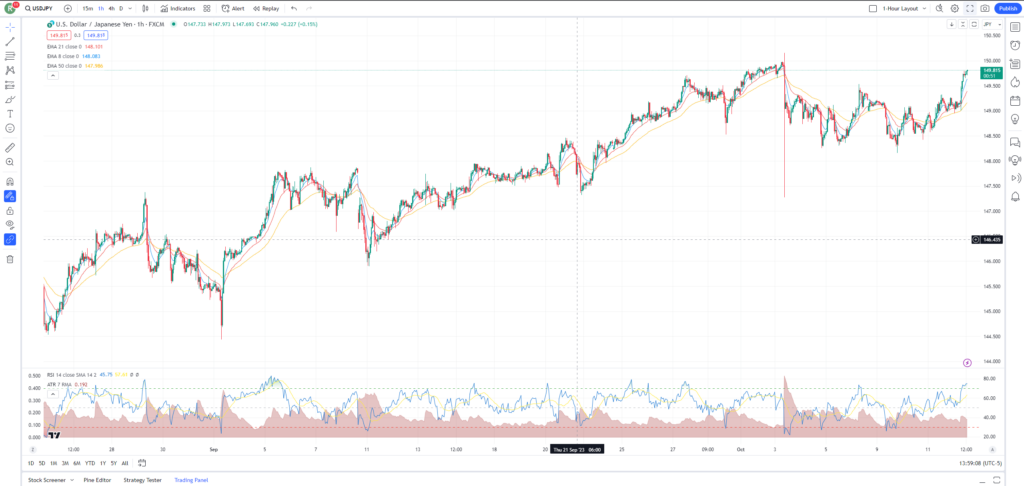
MetaTrader 4, NinjaTrader and TradingView are popular choices, known for their reliability and range of features.
2. Choosing a Broker:
Brokers act as intermediaries to your transactions, so trust and competence are key. Consider these factors:
- Regulatory compliance: Ensure your broker is compliant with regulatory bodies (like the NFA or CFTC in the U.S., FCA in the U.K., or ASIC in Australia) to safeguard your funds. Some examples to look at are OANDA and IG Group.
- Trading spreads & commissions: Analyze fee structures. Lower trading costs are beneficial, but they shouldn’t come at the expense of poor execution or platform quality.
- Initial deposit: Some brokers allow you to start trading with as little as $50, while others require higher minimum deposits.
- Ease of deposits & withdrawals: Assess the broker’s policies to ensure you can deposit and withdraw funds with ease.
- For more in-depth guide on Forex brokers, read out Ultimate Forex Broker Guide.
3. Learning the Basics of Price Analysis:
Understanding price movements, trends, and candlestick formations is foundational:
- Trends: Learn how to identify market trends, including uptrends, downtrends, and sideways trends. Recognizing these can inform your trading decisions.
- Candlestick Formations: Get familiar with basic candlestick patterns (Forex Chart Patterns) like the hammer, doji, and engulfing patterns, as they can indicate market sentiment.
- Other Elements: Understand elements like support and resistance, moving averages, and trading volume. These can provide additional context to the price action.
4. Choosing a Trading Strategy:
There are numerous Forex trading strategies (Forex Strategies) to choose from, such as day trading, swing trading, scalping, or position trading. Select one that best suits your lifestyle, risk tolerance, and experience level. It’s crucial to choose a strategy and stick with it for a while, rather than hopping between strategies.
5. Mastering Your Strategy and Backtesting:
Once you’ve chosen a strategy, immerse yourself in it. Understand its nuances and potential pitfalls. Then, backtest the strategy. This involves testing it against historical market data to see how it would have performed. You should do this manually, spending significant time studying charts and market conditions to understand why some trades would have succeeded while others failed.
6. Start Trading:
After backtesting, if your strategy shows a consistent positive return, it’s time to start trading. Begin with a demo account to get a feel for live trading but without the financial risk. Then, once comfortable, transition to trading with real money. Start small and increase your investment as you gain more confidence and experience.
7. Continuous Learning:
The Forex market is dynamic, and successful traders are those who never stop learning. Keep expanding your knowledge through books, online resources, forums, webinars, and more. Staying updated on market news and regularly analyzing your trading performance is also crucial.
Additional Points:
- Emotional Control: Trading can be a rollercoaster, and letting emotions dictate your decisions can be disastrous. Develop a trading plan and stick to it, regardless of fear or greed.
- Risk Management: Only trade with money you can afford to lose. Utilize stop-losses and take-profits, and never risk more than a small percentage of your trading capital on a single trade.
Remember, patience and perseverance are key. Success in Forex trading doesn’t come overnight but is the result of consistent effort and continual learning.
In addition, some specialized strategies involve focusing on specific chart or line patterns, such as Forex line trading, or riding the market momentum, like the Forex trend trading strategy. STXForex’s strategies section offers an extensive array of methodologies to explore.
Tips for Beginners
Embarking on the Forex journey demands a strategic approach:
- Draft a Trading Plan: Outline your goals, risk tolerance, and evaluation criteria.
- Stay Updated: Markets are dynamic. Regularly consult resources, like STXForex, for news and insights.
- Manage Emotions: Trading is a cerebral activity. Emotional decisions often lead to losses.
- Discipline and Patience: Markets won’t always favor you. Stay patient and adhere to your strategy.
- Explore STXForex.com: This platform offers extensive content, tools, and community engagement, essential for a holistic trading education. Their comprehensive guide on Forex supply and demand zones is a prime example.
Forex trading, while challenging, offers vast opportunities. By equipping oneself with knowledge, practicing rigorously, and approaching the market with caution, success is attainable. Remember, every expert was once a beginner.
Recommended Resources for Further Reading
The path to Forex mastery is continuous learning. Here are some resources:
- Books covering trading psychology and strategies.
- Online courses that offer interactive learning.
- Engaging forums where traders share experiences.
- And of course, STXForex, a one-stop destination for all Forex needs, from understanding different Forex pairs to mastering advanced strategies.