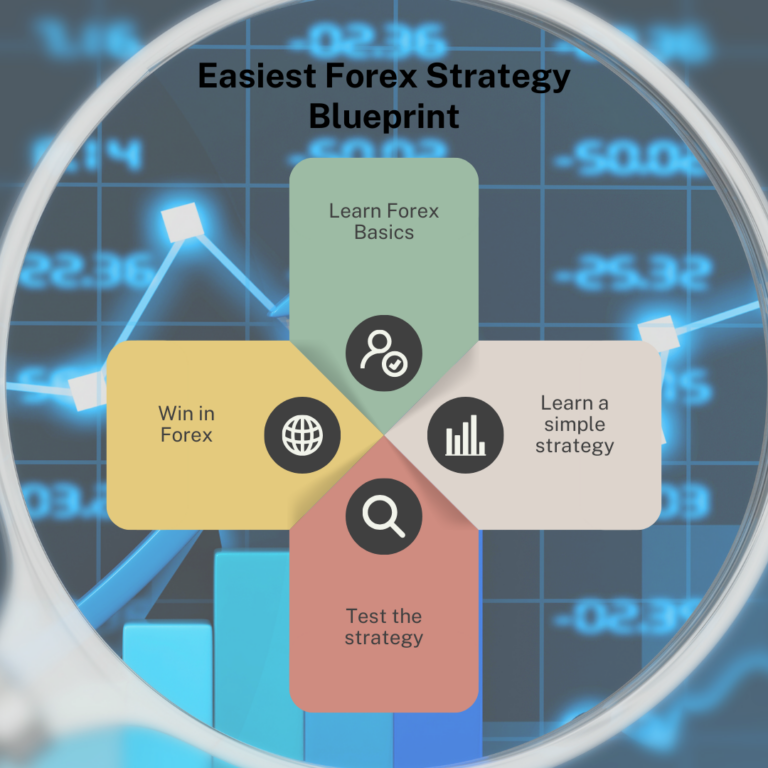

Choosing the Right Forex Strategy: A Comprehensive Guide
Forex trading, a complex and dynamic marketplace, demands more than just a basic understanding of market mechanics; it requires a well-tailored trading strategy. After mastering the basics of Forex trading, choosing the right forex strategy is crucial for achieving success and can be the deciding factor between profit and loss in the volatile world of currency exchange. This guide provides an in-depth look at how to choose a Forex trading strategy that aligns with individual goals, risk tolerance, and market understanding, ensuring a well-rounded and effective approach to Forex trading.
Key Concepts
- Align your personal trading goals with the right Forex strategies.
- Understand the impact of your psychological makeup on trading decisions.
- Figure out your risk tolerance to select a strategy with an appropriate risk level.
- Consider your available time to choose a suitable trading strategy.
- Important! Test strategies before live trading.
Understanding Your Trading Goals and Preferences
Before exploring the myriad of Forex trading strategies, it’s essential to establish clear personal trading goals and preferences. These goals can range from achieving short-term profits through aggressive day trading to pursuing long-term capital growth through more measured strategies. The choice of trading strategy should reflect these objectives.
Trader Psychology
Forex trading is as much a psychological endeavor as it is a financial one. The ability to remain calm under pressure, avoid impulsive decisions, and effectively manage emotions is crucial. A trader’s psychological disposition significantly influences their approach to risk, decision-making, and strategy selection. A clear understanding of your psychological strengths and weaknesses can guide you in choosing a strategy that complements your temperament.
Risk Tolerance
Each Forex trading strategy comes with its inherent risk-reward balance. High-risk strategies, such as scalping or day trading, may offer greater return potential but require a higher tolerance for risk and rapid decision-making. Conversely, lower-risk strategies like swing trading or position trading offer more stability but may generate returns more slowly. It’s important to match your risk tolerance with the appropriate trading strategy to maintain comfort and confidence in your trading decisions.
Time Commitment and Strategy Compatibility
In the realm of Forex trading, the amount of time you can allocate to your trading activities plays a crucial role in determining the most suitable strategy from many different types of strategies. This section explores how different trading strategies align with various time commitments, helping traders find a balance between their trading ambitions and lifestyle.
Day Trading: The Time-Intensive Approach
- Characteristics: Day trading involves making multiple trades within a single day, capitalizing on short-term market movements.
- Time Requirement: This strategy demands constant market monitoring, quick decision-making, and the ability to react promptly to market changes.
- Suitable For: Ideal for full-time traders who can dedicate several hours a day to trading and enjoy a fast-paced trading environment.
Swing Trading: The Balanced Approach
- Characteristics: Swing trading focuses on capturing gains in a stock (or in our case, currency pair) over a period of a few days to several weeks.
- Time Requirement: Less time-intensive than day trading, swing trading still requires regular monitoring of market trends and setups, but it allows for a more flexible schedule.
- Suitable For: Traders who cannot commit to full-time trading but are willing to spend a few hours each week analyzing the market and making informed decisions.
Position Trading: The Long-Term Approach
- Characteristics: Position trading is a long-term strategy where traders hold positions for weeks, months, or even years, with the expectation that their value will grow over time.
- Time Requirement: It requires the least time commitment on a day-to-day basis but demands thorough long-term market analysis and patience.
- Suitable For: Ideal for traders with a busy schedule or those who prefer a less hands-on approach to trading, focusing on long-term market trends and economic cycles.
Scalping: The High-Frequency Approach
- Characteristics: Scalping is a strategy that aims to make profits from small price changes, and it’s one of the most time-sensitive and fast-paced trading strategies.
- Time Requirement: Scalpers need to be able to dedicate several hours of undivided attention to their screens, as they make dozens, sometimes hundreds of trades in a single day.
- Suitable For: Traders who can afford to spend a substantial part of their day in front of the computer and enjoy a high-energy trading style.
Choosing the Right Strategy
- The choice of strategy should align with your time availability, risk tolerance, and overall trading goals.
- Experiment with different strategies in a demo account to understand their nuances before applying them in live trading.
- Stay adaptable; as market conditions change, so too might the effectiveness of a chosen strategy.
Testing Strategies Before Going Live
Before fully committing to any Forex trading strategy in a live market environment, it’s crucial to rigorously test the strategy. This final section emphasizes the importance of this step and outlines how to effectively trial different trading strategies.
Importance of Strategy Testing
- Risk Mitigation: Testing allows traders to evaluate the effectiveness of a strategy without risking real capital.
- Understanding Strategy Dynamics: It provides a hands-on experience of how a strategy performs under various market conditions, helping to fine-tune it.
- Building Confidence: Successful testing can increase a trader’s confidence in their strategy, leading to more disciplined and effective trading.
Methods of Testing
- Demo Accounts: Most online Forex brokers offer demo accounts where traders can simulate trading with virtual money. This is an ideal way to test strategies in real-time market conditions without financial risk.
- Backtesting: This involves applying a trading strategy to historical market data to ascertain its viability. Various software tools can automate this process, providing insights into a strategy’s historical performance.
- Paper Trading: This traditional method involves tracking trades manually on paper, giving traders a more in-depth understanding of their strategy and helping them refine decision-making processes.
Key Aspects to Evaluate During Testing
- Profitability: The ability of the strategy to generate profits over time.
- Consistency: How consistently the strategy performs, considering various market conditions.
- Risk/Reward Ratio: Understanding the potential losses relative to potential gains.
- Emotional Compatibility: Assessing how well the strategy aligns with your emotional and psychological comfort levels.
Adapting and Refining Strategies
- Continuous Learning: The Forex market is dynamic, and strategies may need adjustments. Regularly reviewing and updating your strategy is crucial.
- Responding to Market Changes: Being adaptable to market shifts and able to modify your strategy accordingly is essential for long-term success.
- Seeking Feedback and Learning: Engaging with trading communities and seeking feedback from experienced traders can provide valuable insights and help refine your strategy.
Transitioning to Live Trading
- Starting Small: When you move to live trading, start with smaller trades to get a feel for the market’s psychological and emotional aspects.
- Monitoring and Adjusting: Continuously monitor the performance of your strategy in the live market and be prepared to make adjustments as needed.
- Risk Management: Always practice sound risk management, including setting stop-loss orders and managing trade sizes, to protect your capital.
Testing and refining your Forex trading strategy is a non-negotiable step in your journey to becoming a successful trader. By investing time in testing, you gain invaluable insights, refine your approach, and prepare yourself for the realities of live trading. Remember, a strategy is not just about making profits; it’s about consistency, risk management, and alignment with your trading style and goals.
FAQ’s
- What are Forex strategies?
- Forex strategies are systematic rules or methods used by traders to determine how to enter and exit trades in the Forex market. These strategies help traders to analyze market behavior consistently and objectively, aiming to gain insights and make informed decisions.
- Can you get rich by trading Forex?
- While Forex trading offers the potential for profitability, it is not a guaranteed ‘get rich quick’ scheme. Success in Forex trading requires knowledge, skill, and disciplined risk management. It involves both wins and losses and carries the risk of losing more than the initial investment in some cases.
- What is the best Forex strategy that always wins?
- There is no Forex strategy that always wins. Trading involves inherent risk, and no single strategy guarantees consistent profits. Successful Forex trading is about managing risk, understanding market dynamics, and adapting strategies to changing market conditions. It’s important for traders to understand that trading is not about always winning, but rather about effective risk management and decision-making.